
Last Updated on August 12, 2026 by Mat Diekhake
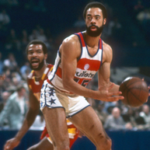 Phil Chenier was one of the most reliable scorers of his era, known for his polished offensive game and consistent production in the backcourt. His impact with the franchise helped make him a fan favorite, and his long association with the team continued well after his playing days ended.
Player Profile
Personal Information:
- Full Name: Philip Chenier
- Nationality: American
- Date of Birth: October 30, 1950
- Hometown: Berkeley, California, USA
- Height: 6 feet 3 inches (1.91 meters)
- Weight: 180 pounds (82 kilograms)
- Position: Shooting Guard
- Jersey Numbers: 45, 30, 15
Education:
- High School: Berkeley High School, Berkeley, California
- College: University of California, Berkeley
Professional Career:
- NBA Draft: Selected as a hardship case by the Baltimore Bullets in 1971
- Teams Played For:
- Baltimore/Capital/Washington Bullets (1971–1979)
- Indiana Pacers (1979–1980)
- Golden State Warriors (1980–1981)
- NBA Championship Rings: 1 (1978 with the Washington Bullets)
Career Highlights:
- NBA Champion (1978)
- Three-time NBA All-Star (1974, 1975, 1977)
- All-NBA Second Team (1975)
- NBA All-Rookie First Team (1972)
- Jersey number 45 retired by the Washington Wizards
Post-Retirement:
After retiring as a player, Chenier transitioned into broadcasting, serving as a color analyst for the Washington Bullets/Wizards from 1987 to 2017.
Personal Life:
- Family: Phil Chenier resides in Columbia, Maryland, with his wife, Gerry. He has two daughters and one son.
Player Archetype / Play Style
Phil Chenier fit the archetype of a polished two-way shooting guard, the kind of perimeter scorer who could carry offense without playing like a ball-dominant lead guard. Defensively, he handled a real backcourt assignment rather than a hidden one, with his reputation tied to solid perimeter work and all-around guard play. Offensively, he operated as a scoring wing first—comfortable rising into jumpers, working off the ball, and adding enough passing to keep the offense flowing. At 6’3″ and 180 pounds, Chenier had a lean guard build, and that lighter frame paired well with his quickness and smooth shooting mechanics. His overall style was sleek and controlled: a refined scorer with touch, rhythm, and balance, but also a player respected for bringing substance on both ends instead of empty volume. (NBA)
Scouting Report
Phil Chenier scored with a smoothness that could fool you into thinking the defense was giving him easy looks when, in reality, he had created the advantage several steps earlier. He rarely wasted motion. One change of direction coming off a screen, a subtle shoulder fake on the catch, or a quick stop into a pull-up was usually enough to put his defender in recovery mode. What always stood out to me was how comfortable he was attacking the space between defenders rather than trying to beat the first man cleanly. If the big sat back, he’d rise from the foul-line area. If the help stepped up, he’d slip a pass to a cutter or move the ball before relocating for another scoring chance. His game wasn’t built on pounding the ball for long stretches; it flowed from timing and precision, which made him an easy fit alongside another primary creator. Defensively, Chenier brought similar discipline. He fought over screens without taking unnecessary risks, stayed connected to shooters curling off pin-downs, and understood when to stunt toward the ball before recovering under control. He wasn’t the kind of guard who erased mistakes with overwhelming length or explosive recovery speed, so bigger wings could create problems by backing him down or forcing switches into physical matchups, but he consistently made opponents work for clean catches instead of giving away easy separation. The interesting thing is that his best offensive possessions often began without the ball in his hands. He trusted the action, kept moving through relocations and secondary cuts, and arrived in scoring areas just as the defense shifted elsewhere. That’s a trait that tends to age well because it isn’t dependent on raw athleticism. To me, Chenier would thrive next to a creative point guard and a frontcourt capable of setting solid off-ball screens, allowing him to operate as a constant scoring outlet rather than carrying the responsibility of initiating every trip. Stylistically, his blend of movement shooting, mid-range polish, and understated playmaking resembled Allan Houston, while his patient approach to finding scoring windows also brought to mind Michael Redd, guards who punished defensive lapses through timing as much as talent. — Mat Diekhake, HeatingUp
Sources: Phil Chenier player profile — NBA.com; Phil Chenier stats, height, weight, position, draft status and more — Basketball-Reference; BF #5: Phil Chenier — Bullets Forever; Phil Chenier: Can He Unseat Walt Frazier as Basketball’s Top Guard, 1975? — From Way Downtown