
Last Updated on July 26, 2026 by Mat Diekhake
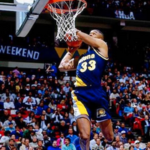 Antonio Davis, a 6-foot-9 power forward/center from the United States who spent the bulk of his career in the NBA, built his game around rugged interior defense, disciplined positioning, and the willingness to do the hard work that rarely appears in a box score. Watch enough of his games and a pattern emerges: he set bruising screens, boxed out with purpose, challenged every trip into the paint, and gave coaches a dependable frontcourt presence whose value often became clearest when the game turned physical.
Here’s detailed information about Antonio Davis:
Player Profile
- Full Name: Antonio Lee Davis
- Nationality: American
- Age: Born October 31, 1968
- Hometown: Oakland, California
- Height: 6 feet 9 inches (2.06 m)
- Weight: 215 lbs (98 kg)
- Wingspan: 7 feet 0 inches (2.13 m)
- Shoe Size: Size 16 (US)
- Number: Wore jersey numbers 33, 32, 9, and 34 during his NBA career
- Position: Power forward / Center
- High School: McClymonds High School (Oakland, California)
- College: UTEP (University of Texas at El Paso) (1986–1990)
- NBA Draft: 1990 NBA Draft, Round 2, Pick 45 by the Indiana Pacers
- Teams Played For:
-
- Indiana Pacers (1993–1999)
- Toronto Raptors (1999–2003)
- Chicago Bulls (2003–2004, 2005–2006)
- New York Knicks (2005)
Note: Davis also played in Europe for Panathinaikos (Greece) from 1990 to 1992 and Philips Milano (Italy) from 1992 to 1993 before joining the NBA.
- Championship Rings: None
- Kids: Antonio Davis has twins:
- Antonique Davis (daughter)
- A.J. Davis (son), who played college basketball and pursued a professional basketball career.
- Siblings: Information about siblings is not widely documented.
Player Archetype / Play Style
Antonio Davis’s archetype was that of a rugged interior big who won with strength, rebounding, screening, and physical defense rather than finesse offense or face-up creation. Defensively, he operated as a tough paint protector and positional post defender who could absorb contact, finish possessions on the glass, and give teams a reliable interior presence at either power forward or center. Offensively, his role was more functional than featured, built around put-backs, short finishes, mid-post work, screen-setting, and hard-nosed complementary scoring. At 6-foot-9 and 245 pounds, Davis had the broad frame and physical power of a classic old-school frontcourt player, and his overall play style reflected that identity: competitive, bruising, steady, and team-oriented, with most of his value coming from doing the dirty work that helped balance a lineup. (NBA)
Scouting Report
Antonio Davis was the kind of big man whose value became more obvious the longer you watched a game. There wasn’t much wasted in what he did. He set wide, physical screens that actually created separation instead of slipping out early, rolled with purpose and understood when to stop short for a simple catch rather than diving into traffic. Around the basket he scored through balance and persistence, carving out post seals before the pass arrived and relying on jump hooks, quick pivots and second-effort finishes rather than elaborate footwork. What stands out is how disciplined he was offensively. He rarely chased touches that weren’t there, and if the defence collapsed on him, he’d move the ball quickly to the next shooter instead of forcing awkward attempts through bodies. Defensively, Davis brought structure to the frontcourt. He was excellent at absorbing contact on the initial drive, sitting comfortably in drop coverage and forcing ball-handlers into floaters instead of clean layups. He also had a good feel for low-man rotations, arriving early enough to discourage the pass without completely abandoning his own assignment, and he consistently finished possessions by sealing off rebounders before looking for the ball himself. That’s an easy detail to miss until you realise how many defensive stops begin with that first box-out. The trade-off was that he wasn’t built to defend in space for long stretches. Quicker offences that spread the floor and repeatedly dragged him into empty-side pick-and-rolls could expose his lateral limitations, and he wasn’t going to stretch a defence offensively or create offence late in the clock. His ideal role is next to dynamic perimeter creators and an active weak-side shot blocker, allowing him to handle the physical work inside while others provide the offensive creativity. To me, his game shared a lot with Dale Davis in its rugged interior approach, although Antonio offered a little more polish around the basket, and there were shades of Udonis Haslem in the way he quietly stabilised both ends of the floor through positioning, screening and consistently making the simple basketball play.
Fun Facts:
- Antonio Davis was known for his toughness, rebounding, and defensive prowess.
- He was an NBA All-Star in 2001 during his tenure with the Toronto Raptors, where he was instrumental in helping the team reach the playoffs.
- Davis played a critical role in the development of the Raptors’ early success alongside stars like Vince Carter and Tracy McGrady.
- European Experience: Davis honed his skills in Europe before entering the NBA, which contributed to his polished post game and basketball IQ.
- He served as the president of the NBA Players Association during his career, advocating for player rights and benefits.
- Davis retired in 2006, leaving behind a reputation as a dependable, hardworking big man who made a significant impact both on and off the court.
- Post-retirement, Davis has stayed involved in basketball and player development while focusing on family life.
Sources:
NBA.com — Antonio Davis | Forward-Center
Basketball-Reference — Antonio Davis Stats, Height, Weight, Position, Draft Status and more
Raptors HQ — Power Forward Friday: Reviving Antonio Davis
Wikipedia — Antonio Davis