
Last Updated on August 12, 2026 by Mat Diekhake
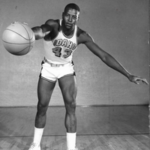 Gus Johnson was one of the most explosive forwards of his generation, blending strength, leaping ability, and relentless energy in a way that stood out even among the stars of his era. Long before highlight reels became a staple of the sport, he built a reputation as a player who could change the feel of a game with a single play.
Player Profile
Personal Information:
- Full Name: Gus Johnson Jr.
- Nationality: American
- Date of Birth: December 13, 1938
- Place of Birth: Akron, Ohio, USA
- Date of Death: April 29, 1987
- Height: 6 feet 6 inches (198 cm)
- Weight: 230 pounds (104 kg)
- Position: Power Forward / Small Forward
- Jersey Number: 25
Education:
- High School: Central High School, Akron, Ohio
- Colleges:
- Boise Junior College (now Boise State University)
- University of Idaho
Professional Career:
- NBA Draft: Selected in the 2nd round (10th overall) by the Chicago Zephyrs in the 1963 NBA Draft; rights traded to the Baltimore Bullets
- Teams Played For:
- Baltimore Bullets (1963–1972)
- Phoenix Suns (1972)
- Indiana Pacers (ABA) (1972–1973)
- NBA Championship Rings: None
Career Highlights:
- Five-time NBA All-Star
- Four-time All-NBA Second Team selection
- NBA All-Defensive First Team (1970)
- Inducted into the Naismith Memorial Basketball Hall of Fame in 2010
- Jersey number 25 retired by the Washington Wizards (formerly Baltimore Bullets)
Personal Life:
- Siblings: Brother Perry Johnson
Player Archetype / Play Style
Gus Johnson fit the archetype of an explosive power forward, a forceful interior finisher and rebounder who helped shape the modern athletic four. Defensively, he played an impact role around the paint and across the frontcourt, bringing shot-blocking, strength, and above-the-rim disruption rather than just positional coverage. Offensively, he worked as a pressure scorer inside, thriving on finishes near the basket, second-chance work, and powerful attacks that played to his leaping ability and physical edge. At 6’6″ and 235 pounds, Johnson was unusually muscular for his era, pairing a tight-end build with rare lift and quickness. His overall style was violent in the best sense of the word: a high-energy, intimidating frontcourt player whose blend of power, spring, and flair made him one of the early great aerial big men and a prototype for later high-flying forwards. (Basketball Reference)
Scouting Report
Gus Johnson played with a level of force that changed the geometry of the floor before the ball even reached him. The first thing you notice isn’t the vertical explosion everyone talks about—it’s how violently he established position. He buried defenders under the rim with early post seals, sprinted into offensive rebounding lanes before the defense could locate him, and attacked loose balls as if every possession was ending on that play. Once he caught the ball inside, there wasn’t much hesitation. One hard dribble, a powerful shoulder into the defender’s chest, and he was looking to finish through contact rather than around it. He wasn’t a hub offense flowed through from the elbows, but he recognized double teams quickly enough to kick the ball back out before the defense could completely collapse, keeping possessions alive instead of forcing impossible finishes. Defensively, Johnson covered an enormous amount of ground because he anticipated the next rotation instead of simply reacting to it. He arrived as the low man with real force, challenged shots without giving away deep rebounding position, and was quick enough laterally to hedge onto ball handlers before recovering back to the paint. The trade-off was that his aggressive style occasionally pulled him into foul trouble, and when he committed fully to challenging a drive, crafty offensive players could use that momentum against him with drop-offs or dump-off passes behind the play. Even so, opponents rarely enjoyed playing through him for an entire game because every cut into the lane came with a physical price. To me, his ideal role was next to a skilled playmaking guard and a floor-spacing frontcourt partner who could pull another defender away from the basket, leaving Johnson free to dominate the paint as a screener, roller, offensive rebounder, and interior defensive anchor. It’s easy to overlook how much offense he generated without designed touches; many of his best scoring opportunities came from creating second possessions or outrunning bigger centers in transition. Stylistically, he blended elements of Larry Johnson’s power and explosiveness with the relentless interior presence of Shawn Kemp, though his game leaned even more heavily on physical leverage, rebounding position, and imposing himself around the rim than perimeter creation. — Mat Diekhake, HeatingUp
Sources: Gus Johnson player profile — Basketball-Reference; BF #10: Gus “Honeycomb” Johnson — Bullets Forever; Gus Johnson Hall of Fame profile — Naismith Basketball Hall of Fame