
Last Updated on July 28, 2026 by Mat Diekhake
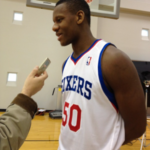
Lavoy Allen was a dependable NBA power forward and center whose rebounding, positional defense, and unselfish interior play made him a valuable rotation big for the Indiana Pacers during the 2010s. Never reliant on high scoring, Allen thrived as a screen setter, defensive rebounder, and high-IQ frontcourt role player who consistently strengthened disciplined, team-oriented lineups.
Here is the detailed information about Lavoy Allen:
Player Profile
- Full Name: Lavoy Allen
- Nationality: American
- Age: Born February 4, 1989
- Hometown: Trenton, New Jersey, USA
- Height: 6 feet 9 inches (206 cm)
- Weight: 255 pounds (116 kg)
- Wingspan: 7 feet 0 inches (213 cm)
- Shoe Size: 15 (US)
- Jersey Number: 50
- Position: Power Forward / Center
- High School: Pennsbury High School, Fairless Hills, Pennsylvania
- College: Temple University
- NBA Draft: 2011, 2nd round, 50th overall pick by the Philadelphia 76ers
- Teams Played For:
- Philadelphia 76ers (2011–2014)
- Indiana Pacers (2014–2017)
- Championship Rings: None
- Kids: Lavoy Allen has two children, a son named Kai and a daughter named Lyla.
- Siblings: Lavoy Allen has two brothers, Todd and Maurice Allen.
Player Archetype / Play Style
Lavoy Allen’s player archetype was that of a sturdy, blue-collar interior big: a rebound-first power forward/center who anchored lineups with physicality, defensive discipline, and low-maintenance offense. Defensively, he fit as a positional team defender who protected the paint more with strength, timing, and awareness than sheer explosiveness, which aligned with both his repeated Atlantic 10 All-Defensive recognition and Temple’s elite defensive profile during his years there. Offensively, he was a complementary frontcourt piece rather than a featured scorer, doing his best work as a screener, offensive rebounder, interior finisher, and occasional mid-range release valve instead of a high-usage creator. Physically, Allen brought a strong 6-foot-9, 260-pound frame that helped him hold space inside, absorb contact, and battle on the glass at both ends. Overall, his play style was practical and unselfish: he supplied toughness, rebounding, interior defense, and efficient support play without needing the ball to make an impact. (Basketball Reference)
Scouting Report
Lavoy Allen’s game was built around understanding where the next play was going before everyone else reacted to it. He rarely demanded touches, but possessions often settled because he was in exactly the right spot, whether that meant setting a sturdy screen, sliding into open space for a short jumper or arriving early for an offensive rebound after reading the flight of the ball. It’s easy to overlook how comfortable he was making quick decisions from the elbows. He wasn’t running offence through DHOs as a featured hub, yet if a guard hit him on the move, he’d immediately find a cutter, reverse the ball or flow into another screen without letting the defence reset. Around the basket he relied on timing more than explosion, using clever post seals and soft touch with either hand rather than trying to finish through sheer force. Defensively, Allen consistently recognised actions before they fully developed. He rotated into help early, tagged rolling bigs without losing track of his own assignment and was disciplined enough in drop coverage to encourage difficult floaters instead of opening direct paths to the rim. The trade-off came whenever he had to defend extended possessions in space. Dynamic forwards who could attack off the dribble or offences that forced repeated switches gradually pulled him away from the areas where he was most effective. That’s why his best basketball came alongside an athletic rim protector or an aggressive point-of-attack defender who allowed him to spend more time organising the back line than chasing guards on the perimeter. To me, his style echoed Nick Collison in the willingness to do the connective work that kept an offence and defence functioning, while there were shades of Brandon Bass in the dependable mid-range touch and understated ability to punish defenders who lost concentration for just a moment. He wasn’t trying to dominate possessions. He was constantly improving the odds that the next possession would end well.
Sources:
Basketball-Reference — Lavoy Allen Stats, Height, Weight, Position, Draft Status and more
Sports Reference — Lavoy Allen 2010-11 Game Log
Sports Reference — 2009-10 Temple Owls Men’s Roster and Stats
Sports Reference — Men’s Atlantic 10 Conference All-Freshman Winners