
Last Updated on July 23, 2026 by Mat Diekhake
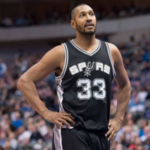 Boris Diaw brought a rare blend of size, skill, and basketball intelligence to every team he played for, often functioning as a playmaker despite spending much of his career in the frontcourt. His unselfish style and ability to impact games in countless ways made him a valuable contributor on winning teams and one of the most unique players of his era.
Here is detailed information about Boris Diaw:
Player Profile
- Full Name: Boris Babacar Diaw-Riffiod
- Nationality: French
- Date of Birth: April 16, 1982
- Birthplace: Cormeilles-en-Parisis, France
- Height: 6 feet 8 inches (2.03 meters)
- Weight: 250 pounds (113 kg)
- Wingspan: 7 feet 1 inch (216cm)
- Shoe Size: Size 16 (US)
- Position: Power Forward / Center
- Jersey Numbers: 32, 13 (Atlanta Hawks), 3 (Phoenix Suns), 32 (Charlotte Bobcats), 33 (San Antonio Spurs), 33 (Utah Jazz)
- High School: Information not publicly available
- College: Did not attend college; began professional career in France
- Professional Debut: 2001 with Pau-Orthez in France
- NBA Draft: Selected by the Atlanta Hawks as the 21st overall pick in the 1st round of the 2003 NBA Draft
- NBA Teams:
- Atlanta Hawks (2003–2005)
- Phoenix Suns (2005–2008)
- Charlotte Bobcats (2008–2012)
- San Antonio Spurs (2012–2016)
- Utah Jazz (2016–2017)
- Career Highlights:
- NBA Champion (2014) with the San Antonio Spurs
- NBA Most Improved Player (2006)
- French League Champion (2001, 2003)
- French Cup Winner (2002, 2003)
- Championship Rings: 1 (2014 NBA Championship with the San Antonio Spurs)
- Personal Life:
- Parents:
- Mother: Élisabeth Riffiod, a former professional basketball player for the French national team
- Father: Issa Diaw, a former Senegalese high jump champion
- Siblings:
- Brother: Martin Diaw
- Half-brother: Paco Diaw
- Children: Information not publicly available
- Parents:
Player Archetype / Play Style
Boris Diaw was the rare point forward / connective big, a multi-skilled frontcourt piece whose game revolved around feel, versatility, and decision-making more than raw scoring; defensively, he filled a flexible team role, using his size, positioning, and intelligence to guard bigger forwards, hold up in switches, and function as a solid help defender rather than a pure shutdown specialist; offensively, he operated as a passer from the elbows and high post, a ball mover, screener, and opportunistic scorer who could keep an offense flowing without needing heavy shot volume. Physically, Diaw combined a sturdy 6-foot-8, 250-pound frame with unusual coordination and touch for a player his size, which is a big reason he could credibly play multiple positions. In practice, his style was cerebral and unselfish: he linked possessions together, made quick reads, defended across roles, and gave lineups value through versatility, passing, and overall basketball IQ. (NBA)
Scouting Report
Boris Diaw saw the floor like a guard trapped inside a forward’s body, and that’s what made him so difficult to defend because the obvious play was rarely the one he chose. What stands out is how comfortable he was catching at the elbow or the top of the key, waiting an extra beat for cutters to develop before slipping bounce passes through impossibly small gaps or flipping the ball to a shooter the moment help leaned in the wrong direction. He wasn’t interested in dominating possessions with volume scoring. Instead, he manipulated spacing through patience, using handoffs, short-roll playmaking, and subtle pivots that forced defenders to reveal their intentions before he acted. That’s where his offense became contagious. Teammates cut harder because they trusted the ball would find them. The trade-off was that he could become almost too unselfish. There were nights when the cleanest option was his own mid-range jumper or post move, yet he’d continue searching for an even better pass, allowing defenses to recover from positions they should have been punished for. Defensively, he relied on anticipation and body positioning far more than speed. He absorbed post-ups from stronger players with remarkable balance, understood when to peel off his assignment to clog driving lanes, and switched intelligently because he recognized actions before they fully developed rather than reacting late. Quick guards could challenge him in space if isolated repeatedly, and explosive vertical athletes occasionally finished over him at the rim, but he compensated by making offenses work through extra decisions instead of direct attacks. To me, Diaw fit best in systems built around ball movement, split actions, and multiple playmakers because every extra touch increased the likelihood that he’d identify something the defense missed. It’s easy to overlook how often he improved a possession without recording the assist, simply by making the pass that forced the defense into rotation before someone else delivered the final feed. Stylistically, he shared elements of Toni Kukoč as a gifted oversized facilitator who blurred positional boundaries, while many aspects of his connective offense foreshadowed the way Draymond Green orchestrates from the elbows and short roll, prioritizing timing and vision over individual scoring.
Sources: NBA.com — Boris Diaw | Center-Forward | San Antonio Spurs; Sports Forecaster — Boris Diaw Stats, Profile, Bio, Analysis and More; Grantland — Mon Frère Boris; ESPN — Boris Diaw’s unlikely arc of triumph